Tuesday, 14 October 2014

More Boatpeople Rescued North of Phuket: Drownings Feared, Trafficker Hunted

By Chutima Sidasathian and Alan Morison

Monday, October 13, 2014
Maung Kyaw Nu,President of Burmese Rohingya Association in Thailand (BRAT) on October 14, 2014 12:39
Most of the Rohingya live in Thailand and Malaysia know  the real trffickers and trawlers or ship owners !!! The trafficking should be stopped if fruitful strategy is adopted by the concerned parties . Most of the Rohingya asylum seekers and kidnapped Bangladeshi are their big profitable business.Millions of US Dollars are earned monthly . Who are benefitted . Rohingyas know all the news .SAVE THE HUMANITY !
Posted by Maung Kyaw Nu,President of Burmese Rohingya Association in Thailand (BRAT) on October 14, 2014 12:39
Boatpeople from the first group arrested in Takuapa, north of Phuket

More Boatpeople Rescued North of Phuket: Drownings Feared, Trafficker Hunted

By Chutima Sidasathian and Alan Morison
Monday, October 13, 2014
PHOTO ALBUM Anoter group of boatpeople rescued north of Phuket have told of a forced swim from one secret island to another in which others have gone missing, and are believed drowned. More » plz read here---
 
http://phuketwan.com/tourism/boatpeople-north-phuket-drownings-feared-trafficker-hunted-21172/

Thailand's Trafficking Revealed: Community Uprising Exposes Industrial Strength Trade

By Chutima Sidasathian and Alan Morison
Tuesday, October 14, 2014

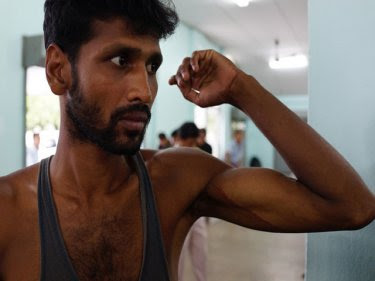
A newly arrived boatperson shows scars from trafficker abuse
Photo by phuktwan.com

News Analysis Thailand's government will be obliged to eradicate human trafficking rather than cover it up following a revolt by the good people of the town of Takuapa More »(please read here)


 Posted by Maung Kyaw Nu,President of Burmese Rohingya Association in Thailand (BRAT) on October 14, 2014 13:17According to our continue assessment and nearly monitoring on genocide escapee Rohingya boat people ,economic and kidnapped Bangaladeshis ,it is very clear that without arrest and confiscating of every movable and immovable properties of traffickers the tragedy can not be stopped. The government authority including multi religious civil society should target traffickers, their muscle men and kidnappers first rather than focus on victims 0nly . Once traffickers' backbones are broken , the trafficking industry will be stopped for ever. The main tragedy producing country Burma must be internationally warned and if necessary intervention is also needed .Thanks to the Thais for chracteristically come forwards to eradict trafficking from Thai soil .It is our call to end humanitarian crisis and deal the Rohingya refugees as per international standard.
Posted by Maung Kyaw Nu,President of Burmese Rohingya Association in Thailand (BRAT) on October 14, 2014 13:17
plz read here--- 
http://phuketwan.com/tourism/thailands-trafficking-revealed-community-uprising-exposes-industrial-strength-trade-21176

PHUKETWAN'S READER FORUM: Have Your Say/PLAY OF THE DAY -ROHINGYA TRAGEDY NEWS AND COMMENTS

PLAY OF THE DAY

PHUKETWAN is obliged to report the issues that come with being Phuket's cutting edge news site. But this is a hagiography-free zone, where 'Advertorials' are clearly labelled. News is not confused with self-promotion.

PHUKETWAN'S READER FORUM: Have Your Say

All these trafficked people should be escorted back to where they want to go, comfortably in air-conditioned coaches....
Re: Thailand Faces Choice: Let Traffickers Continue or Get Serious About Boatpeople and Kidnappers Maung Kyaw Nu,President of Burmese Rohingya Association in Thailand (BRAT) wrote on Tuesday October 14, 2014 at 19:17
Please read as : Bangladesh government should arrange to take back all kidnapped victims from THAILAND soil. I Than...
Re: That Inside Fast Lane Returns for Phuket Motorists on Bypass Road
BeerChang wrote on Tuesday October 14, 2014 at 18:29
@Editor: Thanks for your explafusion or should I call it connation? I will remember it is just the other way round th...
Re: Thailand Faces Choice: Let Traffickers Continue or Get Serious About Boatpeople and Kidnappers Maung Kyaw Nu,President of Burmese Rohingya Association in Thailand (BRAT) wrote on Tuesday October 14, 2014 at 18:26
The BRAT applaude Thai civilsociety's landmark afford . Thailand now has the opportunity to prove it is serious abou...
Considering your current predicament, vis-a-vis the defamation court case, I would say you are "going for broke". ...
Re: Thailand's Trafficking Revealed: Community Uprising Exposes Industrial Strength Trade
Tommy u. Manny wrote on Tuesday October 14, 2014 at 17:03
Reader Letter ! Why turn back time? More than 80% of the tourists want back the full services on all...
Re: Giant Crab Caught and Kept Alive on Phuket
Sue wrote on Tuesday October 14, 2014 at 16:57
I would wish him too a happy breeding in Phuket. It is nowadays almost impossible to find in Phuket a good black/g...

Thailand Faces Choice: Let Traffickers Continue or Get Serious About Boatpeople and Kidnappers


By Alan Morison and Chuitma Sidasathian
Posted by Maung Kyaw Nu,President of Burmese Rohingya Association in Thailand (BRAT) on October 14, 2014 18:26The BRAT applaude Thai civilsociety's landmark afford .
Thailand now has the opportunity to prove it is serious about removing the country from its bottom level rating of Tier 3, achieved in this year's US State Department Trafficking in Persons report. The local of TAKUAPA Catholic, Muslim and Buddhist activists who banded together to help the district chief of the Thai township of Takuapa will be stretched and we fully solidarity with them. The BRAT has been voiced out to delete inhuman policy 'HELP ON' since boat people starts reaching here.I've learnt that a few NGOs used to propose that deadly HELP ON policy to Thai authority . We fully support TAKUAPA LOCAL ELITE's method regarding victims of traffickers and kidnappers.Bangladesh government should arrange to take back all kidnapped victims from Thailand soil.Thailand is ardently requested to deal with traffickers and kidnappers with special law like drug dealers. In the mean times Thai civil soceity is requested to voice out against Burma which is the real actor of producing Refugees. Once Burma respect Human Rights and stop genocide on Rohingyas ,the trafficing and kidnapping industries will be flopped.
Posted by Maung Kyaw Nu,President of Burmese Rohingya Association in Thailand (BRAT) on October 14, 2014 18:26
gravatar Please read as : Bangladesh government should arrange to take back all kidnapped victims from THAILAND soil.
I
Thank you in advance.
Maung Kyaw Nu
Posted by Maung Kyaw Nu,President of Burmese Rohingya Association in Thailand (BRAT) on October 14, 2014 19:17

Kidnap victims nominate the man they say beat and abused them
Photo by phuketwan.com

Thailand Faces Choice: Let Traffickers Continue or Get Serious About Boatpeople and Kidnappers

By Alan Morison and Chuitma Sidasathian
Tuesday, October 14, 2014
Latest One of three Thais being held over human trafficking has named his boss as Thai authorities consider what to do about 132 kidnapped men and a kidnapped boatpeople policy. More »


please read here --
http://phuketwan.com/tourism/thailand-faces-choice-traffickers-continue-serious-boatpeople-kidnappers-21180/

Monday, 13 October 2014

UPDATE Arrested Rohingya North of Phuket Guarded by Volunteers in Thailand Human Trafficking Bust

Posted by Maung Kyaw Nu,President of Burmese Rohingya Association in Thailand (BRAT) on October 13, 2014 16:38

This's our sincere advice to the Thai authority and civil society to keep the rescued Rohingyas out of reach of so called Rohingya translators/interpreters and social /polical workers. It is learnt that some of so called Rohingyas live in Thailand and overseas also directly or indirectly involve human trafficking.They try their best to reach the Rohingya boat people through various way.The international and national news agencies are reqested to hire any Rohingyas as translators/interpreters from Thailand .We do recomment to contact UNHCR ,IRC and IOM to get trusted and skilled translators/interpreters in this feild. The genocidal action is double now in the name of CITIZEN STATUS VARIFICATION . It be full scale continue to divert public mind from coming general election in 2015.

Posted by Maung Kyaw Nu,President of Burmese Rohingya Association in Thailand (BRAT) on October 13, 2014 16:38

The hidden genocide of Burma breeding more more Rohingya boat people and polute the ASEAN region. The UN including Thailand should not sideline this fearful humanitarian crisis.Involve traffickers ,kidnappers and trawlers /ship owners must be trace out immediately and book them for trail .The world should eye on Rohingya tragedy in their motherland and warn Burma actors to halt it urgent .

Posted by Maung Kyaw Nu,President of Burmese Rohingya Association in Thailand (BRAT) on October 13, 2014 14:33

Burmese Rohingya Association in Thailand (BRAT): Kidnapped Boatpeople Declared Human Trafficking Vi...

Burmese Rohingya Association in Thailand (BRAT): Kidnapped Boatpeople Declared Human Trafficking Vi...: By Chutima Sidasathian and Alan Morison Posted by Maung Kyaw Nu,President of Burmese Rohingya Association in Thailand (BRAT) ...

Kidnapped Boatpeople Declared Human Trafficking Victims in Landmark Decision By Thai Police

By Chutima Sidasathian and Alan Morison

Posted by Maung Kyaw Nu,President of Burmese Rohingya Association in Thailand (BRAT) on October 13, 2014 14:22

The real traffickers and kidnappers are a handful Rohingyas who teach and indclude Thais ,Malay and Bangladeshis in this inhuman money making project . If the concerned governments and civisociety are not comefor wards with strong decision ,plan and program to wipe out this trafficking , the southern Thailand will become a big human trafficking market in the world. It's very difficult to turst a handful Roingyas ,Thai Muslim and so called NGO workers whether they directly or indirectly involve in this dirty groups.The present Thai government can stop it if they take it seriously .

Posted by Maung Kyaw Nu,President of Burmese Rohingya Association in Thailand (BRAT) on October 13, 2014 14:22

TOURISM

Kidnapped Boatpeople Declared Human Trafficking Victims in Landmark Decision By Thai Police

By Chutima Sidasathian and Alan Morison

Latest Fifty-three men who say they were kidnapped from their homes in Bangladesh have been declared human trafficking victims by Thai police and should be returned home soon. More »(please read here by clicking more )

http://phuketwan.com/tourism/kidnapped-boatpeople-declared-human-trafficking-victims-landmark-decision-thai-police-21169/Kidnapped Boatpeople Declared Human Trafficking Victims in Landmark Decision By Thai Police

DSI Hunt Mass Kidnap Kingpin: Human Trafficker On The Run North of Phuket

By Chutima Sidasathian and Alan Morison

Posted by Maung Kyaw Nu,President of Burmese Rohingya Association in Thailand (BRAT) on October 13, 2014 17:22

We really applaude kind hearted local multi-Religious people and authority of Thailand for the rescue of kidnapped and genocide scapee Roingya from traffickers. We also thanked to Pukhetwan journaists for their continue newsing first hand report to the world. We also mourn for death and drowned people who were forced to jump in the sea by geedy traffickers. We thanked to the visiting Thai people ,journalists ,medical teams and Thai authrities with helping hands to the Rohingyas.

Posted by Maung Kyaw Nu,President of Burmese Rohingya Association in Thailand (BRAT) on October 13, 2014 17:22

Wanted fugitive in a RUN shirt: the man police believe is a mass kidnapper
Photo by phuketwan.com

DSI Hunt Mass Kidnap Kingpin: Human Trafficker On The Run North of Phuket

By Chutima Sidasathian and Alan Morison

Monday, October 13, 2014

PHOTO ALBUM Authorities have joined the hunt for an alleged mass kidnapper as more rescued boatpeople tell a harrowing tale of life as potential fishing boat slaves. Two are missing, feared drowned. More »

http://phuketwan.com/tourism/dsi-hunt-mass-kidnap-kingpin-human-trafficker-run-north-phuket-21174/

PLAY OF THE DAY

PHUKETWAN is obliged to report the issues that come with being Phuket's cutting edge news site. But this is a hagiography-free zone, where 'Advertorials' are clearly labelled. News is not confused with self-promotion.

PHUKETWAN'S READER FORUM: Have Your Say

Re: Phuket Governor to Order Investigation of Extra Fees at Phuket Immigration Offices
Amazing Thailand wrote on Monday October 13, 2014 at 14:39

I have been charged 200 baht for address verification letters at Phuket Town many times and Patong the one time I wen...

View complete comment

Re: Phuket Governor to Order Investigation of Extra Fees at Phuket Immigration Offices
Logic wrote on Monday October 13, 2014 at 18:21

Only in Thailand do corrupt officials get moved. In other countries, they get sacked, jailed or in some countries in ...

View complete comment

Re: PhuketWATCH Phuket Budget Flight Warning; Kidnappers Sell Boatpeople; Blade Runner's D-Day; Phuket FC Wins
Manowar wrote on Monday October 13, 2014 at 18:18

Not a good morning for the blade runner defense team attempting to mitigate the sentence. They called a correctional...

View complete comment

Re: DSI Hunt Mass Kidnap Kingpin: Human Trafficker On The Run North of Phuket
BeingHum@n wrote on Monday October 13, 2014 at 17:35

Feel extremely sorry for these people. Is there a way that I can help. Please let me know Ed.

View complete comment

Re: DSI Hunt Mass Kidnap Kingpin: Human Trafficker On The Run North of Phuket
Maung Kyaw Nu,President of Burmese Rohingya Association in Thailand (BRAT) wrote on Monday October 13, 2014 at 17:22

We really applaude kind hearted local multi-Religious people and authority of Thailand for the rescue of kidnapped an...

View complete comment

Re: DSI Hunt Mass Kidnap Kingpin: Human Trafficker On The Run North of Phuket
coxo wrote on Monday October 13, 2014 at 16:57

Yeah he really looks like the kingpin, mastermind and financier of this huge people smuggling organization, give me a...

View complete comment

Re: Phuket Governor to Order Investigation of Extra Fees at Phuket Immigration Offices
Mj wrote on Monday October 13, 2014 at 16:50

I fully agree - Transfer all of the Immigration officers to other provinces and replace them with new once. Also educ...

View complete comment

Re: UPDATE Arrested Rohingya North of Phuket Guarded by Volunteers in Thailand Human Trafficking Bust
Maung Kyaw Nu,President of Burmese Rohingya Association in Thailand (BRAT) wrote on Monday October 13, 2014 at 16:38

This's our sincere advice to the Thai authority and civil society to keep the rescued Rohingyas out of reach of so ca...

View complete commentDSI Hunt Mass Kidnap Kingpin: Human Trafficker On The Run North of Phuket

We Were All Kidnapped by Human Traffickers, Say Boatpeople Rescued in Thailand

We Were All Kidnapped by Human Traffickers, Say Boatpeople Rescued in Thailand

Posted by Maung Kyaw Nu,President of Burmese Rohingya Association in Thailand (BRAT) on October 13, 2014 01:41

The open kidnapping Rohingyas in Bangladesh and compelling Rohingyas for deserting their ownland Arakan is a big topic for global civilized people .The recent citizenship VARIFICATION OPERATION AND FORCING ROHINGAYA TO CHANGE THEIR ANCESTRAL ETHNIC NAME LEAD MORE ROHINGYA FLEEING .Its needs to be solved immediately. The big trawlers which can carry around 400 to 800 persons were owned by combined human trafficker gangs consist of a handful Rohingyas andThais .If the trafficers' ship fail to get enough Rohingyas from Arakan ,their organized or appointed muscle men from Bangladesh randomly kidnap Rohingyas from Refugee camps.After arriving in Thailand ,these captives are directly sent to concentration camps run by traffickers in the south. There, the victims are sold .tortured ,killed and raped around the clock. The trafficker ask every captives around 2000 to 2500 USD to be freed. If this crime against the humanity is neglected by Bangladesh ,Thailand and Malaysia ,the traffickers will be more desperate and the human tragedy will not be ended . Burma genocide to Rohingya breeds more traffickers . This should be stopped urgently. Burma should be warned to stop GENOCIDE .

Posted by Maung Kyaw Nu,President of Burmese Rohingya Association in Thailand (BRAT) on October 13, 2014 01:41


PHUKETWAN'S READER FORUM: Have Your Say

http://phuketwan.com/tourism/kidnapped-human-traffickers-boatpeople-rescued-thailand-21167/We Were All Kidnapped by Human Traffickers, Say Boatpeople Rescued in Thailand

Monday, 6 October 2014

Burma's Rohingya Plan Is a 'Blueprint for Segregation'


DW Interview with Phil Robertson
October 6, 2014
Author(s): 
Phil Robertson
Published in: 
DW

Burma recently confirmed to the United Nations that it is on the verge of completing a plan that would grant Rohingya Muslims citizenship if they change their ethnicity to suggest Bangladeshi origin.

Foreign Minister Wunna Maung Lwin told AP that his government has started a "verification process" to enable the mostly stateless minority who has been in Myanmar for many generations to become naturalized citizens. But he says the government is still not recognizing the Rohingya as a group.

Burma's government - which to date has refused to grant the majority of them citizenship - describes the estimated 1.1 million Rohingya as "Bengali," a term which many members of the minority group object to strongly. Many Rohingya live in Apartheid-like conditions in Rakhine state on the western coast of the predominantly Buddhist country. Since sectarian violence erupted in 2012, an estimated 140,000 displaced people - mostly Rohingya - have been living in camps.

In a DW interview, Phil Robertson, deputy Asia director of Human Rights Watch (HRW), slams the government plan, saying that it is nothing less than a blueprint for permanent segregation and statelessness that appears designed to strip the Rohingya of hope and ultimately force them to flee the country.

DW: What exactly is the Myanmar government offering the Rohingya minority?

Phil Robertson: The Myanmar government is not offering the ethnic Rohingya in Rakhine State very much at all. At the center of the plan is the blatantly discriminatory 1982 Citizenship Law that has kept the Rohingya stateless for decades; an arbitrary and opaque citizenship 'assessment' process; and the very likely prospect that most of the over 130,000 Rohingya ensnared in this plan will face years of indefinite detention in locked down, crowded and squalid camps for displaced persons.

For the Rohingya to enter the so-called citizenship verification process, they will be first forced to repudiate their ethnic identity in what is a clear violation of their rights. Put simply, Rohingya can only apply for citizenship under this plan if they agree to adopt the "Bengali" label that they have resisted for years because it connotes that they are coming from outside Myanmar rather than being persons born in the country.

The few that are found to be citizens in the assessment process will presumably have the rights to move and live where they wish - but as many commentators have noted, even if a Rohingya is able to achieve citizenship, that will not protect him if he strays into a Rakhine Buddhist area.

What is your overall view of the plan?

The clashes between Buddhists and Rohingya Muslims in 2012 left scores of people dead and injured

This plan both expands and solidifies the discriminatory and abusive government policies that underpin the decades-long persecution of the Rohingya. To be frank, the plan is a blueprint for permanent segregation and statelessness that appears designed to strip the Rohingya of any remnants of hope that they had for returning to a situation like that before the 2012 violence, when Rohingya Muslims and Rakhine Buddhists were able to co-exist.

It's worth considering that just two years ago before the 2012 violence, Sittwe, the capital city of Rakhine State, was roughly divided 50-50 between Rohingya and Arakanese residents. Under this plan, that will never happen again. The idea of reconciliation has been thrown aside in this plan, and replaced with so-called "peaceful co-existence" - which in my view will mean a permanent segregation of the two communities, with the separation enforced by the might of the Myanmar army and police.

How will the authorities verify who would be eligible for citizenship?

We don't have a good answer for this question as the process is far from transparent. The 1982 Citizenship Law doesn't list the Rohingya as an "ethnic race" of the country meaning that they cannot be citizens unless they can prove that their ancestors resided there before 1823, which is impossible for most.

Rohingya can be considered for "naturalized" citizen status if they can provide "conclusive evidence" that the person in question or his parents entered and resided in Myanmar prior to independence in 1948 - which is also a very high hurdle to surmount.

Further complicating the matter is the fact that ethnic Kaman Muslims are also mixed in with the Rohingya who were forced out of their homes and areas in the violence of June and October 2012. But from a citizenship perspective, the Kaman Muslims are considered one of the 135 ethnic races of Myanmar so if they can prove their ethnic heritage, they are eligible for full citizenship. So some of the Kaman may benefit from the citizenship assessment process, but they'll still have to be labeled as "Bengali" for a while when their application is under consideration.

What is the problem for the Rohingya in accepting the term "Bengali"?

Accepting the term denotes that the Rohingya are foreigners, that they are immigrants from Bangladesh and India, and that they don't belong in Rhakine state or Myanmar. Of course, the Rohingya do not accept what is essentially a denial of their proclaimed ethnic identity, their history, and their community.

For those who agree to be called "Bengali" there is a great risk that if they are not found to be naturalized citizens, they could face deportation from Myanmar. In fact, there are parts of the plan that state the government will do just that.

One part of the plan calls on the government to negotiate with UNHCR about those not qualified for citizenship according to Myanmar laws and are therefore illegal aliens, on the basis that Myanmar as a sovereign state has its own immigration laws and that it will grant appropriate documentation only to those who qualify according to its Citizenship Law. The plan then states the government should "work with UNHCR to resettle the illegal aliens elsewhere."

Why is the Myanmar government denying the Rohingya the right to determine their own ethnicity and social identity?

For some reason, the Myanmar government has decided to scapegoat the Rohingya as undesirables who cause problems. Put quite simply, it's blatant discrimination against an ethnic group. Moreover, the Myanmar federal government has essentially turned a blind eye to the actions of Rakhine Buddhist extremists to incite violence against the Rohingya and target their homes and mosques.

What could happen to those Rohingya who refuse the plan?

Those Rohingya may face years of life in locked down camps unless they decide to flee. Under the plan, those Rohingya who refuse to comply with the government's orders to accept the "Bengali" label will be deemed uncooperative and automatically be sent to permanent resettlement camps with little likelihood of release.

How much has the government's treatment of the Rohingya undermined the country's efforts to open itself to the world?

When the international community discusses human rights in Myanmar, one of the first topics of discussion is the abuse against the Rohingya. By allowing rights abuses to flourish and hatred to fester and grow in Rakhine State, the Myanmar government is doing its reform process a disservice and undermining its own efforts to create a plural, multi-ethnic, multi-cultural democracy that respects human rights.

There is no getting around the fact that left unresolved, the situation in Rakhine State will continue to undermine Myanmar's striving to be accepted by the world community. What's urgently needed now is for foreign donors and UN agencies assisting the country to demand that this plan be revoked and that the planners go back to the drawing board.

Phil Robertson is deputy Asia director of Human Rights Watch. Burma's Rohingya Plan Is a 'Blueprint for Segregation'

Rights groups voice concern over World Bank’s plans for Burma

Rights groups voice concern over World Bank's plans for Burma

Rights groups voice concern over World Bank's plans for Burma

By Oct 06, 2014 6:24PM UTC


Rohingya refugees at Da Paing camp in Rakhine State. Rights groups say it is essential that the World Bank Group sets the right precedent in Burma. Pic: AP.

Rohingya refugees at Da Paing camp in Rakhine State. Rights groups say it is essential that the World Bank Group sets the right precedent in Burma. Pic: AP.

While The World Bank Group (WBG) has aided swaths of struggling economies across the globe, activists in Burma say such assistance for the beleaguered South East Asian nation should come with strict conditions.

"The World Bank has an important role to play in advancing access to education, health, and electricity in Burma [also known as Myanmar]," wrote Jessica Evans, senior international financial institutions researcher at activist NGO Human Rights Watch (HRW), in a press release issued this morning, before adding: "But for The WBG to really advance development, it needs to have its eyes wide open to Burma's ongoing rights problems and actively work to address them."

Chief among those issues is the government's controversial new Rakhine State Action Plan. Critics say the plan will push Burma's Rohingya Muslims to adopt a new ethnicity and falsely admit to being illegal immigrants (despite having resided within the nation's borders for centuries). In the press release, Evans added that it is crucial for these human rights issues to be addressed by WBG president Jim Kim during his slated meeting with Burmese finance officials at the annual International Monetary Fund summit on October 10-12 in in Washington, DC.

But Evans is concerned that the WBG (who did not respond to interview requests for this story) will fail to make such stipulations, and instead find Burma's development with no strings attached. In a later interview with Asian Correspondent, she pointed to a recent HRW case study on the organization's work in Ethiopia as a troubling example. The case study found, among other troubling revelations, that World Bank funding intended for development of the African nation's rural infrastructure was misappropriated for its infamous "villagization" practices, in which over a million marginalized minorities were forcibly, and violently, relocated.

Evans added that, as the largest and most famous development bank in the world, the WBG's initial steps  will set a hefty precedence in Burma.

"The World Bank has an opportunity to set a tone that takes fully into account the many challenges facing Burma and actively work to address them, rather than drawing invisible lines around issues that it considers too thorny," Evans told Asian Correspondent, adding: "In doing this, it will also influence other donors."

But even if such stipulations come to pass, the Burmese government (which did not respond to interview requests) may prove more than reluctant to embrace them. In an earlier interview, Phil Robertson (deputy director of HRW's Asia division) told us that the aforementioned Rakhine State Action Plan "… continues the blatantly discriminatory policies against the Rohingya that we sadly come to expect from the Burma government."

For human rights activists like Robertson, that unsettling trend can be traced back to 2012 when mobs of Burma's Buddhist majority torched thousands of Rohingya homes and killed dozens of the minority Muslims with machetes. From there, over 100,000 displaced Rohingya were housed in new dwellings that activist groups liken to internment camps. The recently unveiled state action plan will relocate the Rohingya to a new, undisclosed location. The plan will offer them citizenship, but only if they admit to being of the "Bengali" ethnicity, implying that they are illegal immigrants from Bangladesh, which may leave them subject to confinement in detention centers.

Those measures seem reasonable to much of Rakhine state's Buddhists population, according to Matthew Smith, executive director of another prominent activist NGO, Fortify Rights.

"The state and national-level authorities regard the Rohingya as invaders from Bangladesh, and the average Rakhine Buddhist is fearful that any recognition of Rohingya ethnicity would embolden Muslims to gain more economic and political power," Smith said in an interview with Asian Correspondent, before adding that sentiment is also driven by far deeper, and more ruthless motives. "If you can deny a population their citizenship, burn them out of their villages, and drive them from the country, it's much easier to confiscate their property and relative wealth, and that's exactly what we're seeing. These proposed policies are further to a well documented campaign of ethnic cleansing."

Robertson said that Rakhine's circumstances have not always been so dire, adding that it's state capital Sittwe was almost evenly divided between Rohingya and Buddhists a mere two years ago, before the surge in ethnic unrest.

"Under this plan, that will never happen again," he said. "The idea of reconciliation has been thrown aside in this plan, and replaced with so-called 'peaceful co-existence' – which will mean permanent segregation of the two communities, with the separation enforced by the might of the Burma Army and police, who have a long record of human rights abuses."

The government has deemed the current and future camps to be a necessary safe zone for the Rohingya who fell prey to the 2012 attacks. Smith concedes this point is true, but only to an extent: "It's sadly accurate that Rohingya would be attacked if they walked through downtown Sittwe tomorrow. But if the authorities were genuinely concerned about protection they'd facilitate lifesaving humanitarian aid and stop fueling the flames of anti-Rohingya sentiment. The authorities have given displaced Rohingya two options: try to survive in squalid ill-equipped camps or flee the country by sea."

Smith added that a June 2014 Fortify Rights investigation (that included confiscated classified documents and interviews with hundreds of fleeing Rohingya) revealed a systemic exodus of the Muslim minority by sea. The report highlighted how that journey is fraught with dangers and how the Burmese government is perpetuating the participants' departure (the report can be viewed here).

Evans said the WBG will have a unique opportunity to address those issues at its Oct. 10 meeting with Burmese officials. She added: "The World Bank Group should also make a firm commitment to ensure that human rights will be respected in all of its investments, both in the public and private sectors, thereby setting an example of rights-respecting development for donors and companies alike."

Smith said a successful honoring of Burma's human rights would include amending its dated 1982 citizenship law, granting the Rohingya equal access to full citizenship, providing them basic protection from future attacks, and allowing the displaced to return home.

"None of that is happening now," he said, adding that another shortcoming has not only proven to be an injustice for the Rohingya, but also those who have been vilified in depictions of the Muslim minority's struggle.

"There should also be accountability for abuses by the state against Rakhine Buddhists and Rohingya Muslims," he said. "The absence of accountability only lays the groundwork for future abuses. Both communities have suffered human rights violations in one way or another."

Smith added that the WBG has "downplayed the situation in Rakhine State, and it's unclear whose interests they serve by doing so… Very little is known about what the bank is planning to do in Rakhine State. The international community should not only avoid complicity… but should actively work against the ethnic and religious discrimination and entrenched segregation we're seeing. The bank has some decisions to make, and we hope they take the right course."


Saturday, 4 October 2014

Worse Abuse Lies Ahead as Burma Tries to Obliterate All 'Rohingya'

Worse Abuse Lies Ahead as Burma Tries to Obliterate All 'Rohingya'Posted by Maung Kyaw Nu,President of Burmese Rohingya Association in Thailand (BRAT) on October 4, 2014 20:36

This is an eleventh hours of times for Rohingyas to be survived in their thousands years old ancestral mother land Arakan and the international community should come forward to stand by the Rohingyas in ONE VOICE. The recently barbaric statement at UN to to wipe out the rest Rohingyas from their home is alarming another genocide on Rohingyas .The random arrest and barbaric torture is going on just after FM statement at UN.The racist regime of U Thien Sein is arming pro govt blood soaked Rakhines to drive out remaining Rohingyas before 2015 . Taking away all rights of Rohingyas through amending black laws fuels a fearful genocide ahead in their areas.Forcefully Naming BENGALI foreigner to Rohingya make totally unacceptable. Rohingyas fleeing by boat is double now.Its also effect the neighboring countries including ASEAN -Pacific countries. Human trafficking are widespread seen along side the border of Thailand and Malaysia. The donors and western counties including ASEN and UN are ardently requested to deploy UN Peace Keeping Forces to rescue the Rohingyas from genocide immediately.

Posted by Maung Kyaw Nu,President of Burmese Rohingya Association in Thailand (BRAT) on October 4, 2014 20:36


There are no Rohingya in Burma, Phuketwan was told at this human trafficking conference between Burma and Thailand on Phuket in August
Photo by phuketwan.com

TOURISM

Worse Abuse Lies Ahead as Burma Tries to Obliterate All 'Rohingya'

By Human Rights Watch media release

Friday, October 3, 2014

Latest Human Rights Watch says Burma's Government, having denied Rohingya citizenship, is now bent on obliterating the category of people off the face of the earth. More »

Continue read heare,please -http://phuketwan.com/tourism/worse-abuse-lies-ahead-burma-tries-obliterate-rohingya-21106/

httt://www.rohingyathai.blogspot.com

Thursday, 2 October 2014

Burma: Government Plan Would Segregate Rohingya

Burma: Government Plan Would Segregate Rohingya
Forced Resettlement, Discriminatory Citizenship Creates Dangers

(New York) – A draft government plan would entrench discriminatory policies that deprive Rohingya Muslims in Burma of citizenship and lead to the forced resettlement of over 130,000 displaced Rohingya into closed camps, Human Rights Watch said today. Burma's international donors, the United Nations, and other influential actors should press the government to substantively revise or rescind its "Rakhine State Action Plan."

The plan follows the April 2013 recommendations of the Rakhine Investigative Commission, established by President Thein Sein after widespread killings and violence against Rohingya in 2012 in the state. The plan, a copy of which was obtained by Human Rights Watch, does not recognize the term Rohingya, referring throughout to "Bengalis," an inaccurate and derogatory term commonly used by Burmese officials and nationalist Buddhists. Muslims are only mentioned in the plan with reference to religious schools.

"The long-awaited Rakhine State Action Plan both expands and solidifies the discriminatory and abusive Burmese government policies that underpin the decades-long persecution of the Rohingya," said Phil Robertson, deputy Asia director. "It is nothing less than a blueprint for permanent segregation and statelessness that appears designed to strip the Rohingya of hope and force them to flee the country."

The plan is supposed to serve as the general blueprint for development and post-conflict reconstruction in the state. The draft is in six sections with detailed bullet points: Security, Stability, and Rule of Law; Rehabilitation and Reconstruction; Permanent Resettlement; Citizenship Assessment of Bengalis; Socio-Economic Development; and Peaceful Coexistence. The section on "Permanent Resettlement" sets out steps for the relocation and encampment of 133,023 Rohingya people from existing internally displaced persons camps around the state capital, Sittwe, and other townships to as yet unspecified sites in the state.

The plan does not discuss the possibility that Rohingya displaced by the violence of 2012 will be permitted to return to their original homes and dispels hopes that Rohingya would be permitted to reintegrate into areas also inhabited by the local Buddhist population.

The plan has scheduled the resettlement of the entire displaced Rohingya population for April and May 2015, just ahead of Burma's annual monsoon season. In preparation, residences, schools, community facilities, and necessary road, electrical, and water and sanitation infrastructure would be constructed by next April.

Since sectarian violence erupted in June 2012 and again in October 2012, an estimated 140,000 mostly Rohingya displaced people have been living in camps around Arakan State, where they are wholly dependent on international humanitarian assistance. Another 40,000 Rohingya live in isolated non-camp communities receiving little outside assistance. The government has failed to arrest or prosecute those responsible for the violence against the Rohingya, particularly the coordinated "ethnic cleansing" of Rohingya communities in October 2012 that Human Rights Watch found rose to the level of crimes against humanity.

Rohingya, who have effectively been denied Burmese citizenship, were excluded from the March-April 2014 nationwide census and face tight restrictions on freedom of movement, employment, livelihoods, access to health care, and freedom of religion. Conditions in the displaced person camps are desperate and have evolved into long-term internment in which Rohingya are not permitted outside of camp zones. The permanent resettlement zones envisioned in the draft plan will deepen the isolation and marginalization of the Rohingya in violation of their freedom of movement and other rights.

"The Burmese government's plan proposes segregation measures that have been advocated by extremists," Robertson said. "Moving the Rohingya further from urban areas to isolated rural camps will violate their basic rights, make them dependent on outside assistance, and formalize the land grab of Rohingya property."

Part IV of the draft plan outlines steps for citizenship assessment of the Rohingya, using as its guide the discriminatory 1982 Citizenship Law, which has been used to deny Rohingya citizenship for decades. The plan includes a nationality verification process that started in August and is supposed to register all "Bengalis" by March. The recorded population will then be divided into three categories: "those previously recorded [or] registered; those not recorded previously but willing to go through the assessment process according to Myanmar [Burma] existing laws; and those who reject definition in the existing laws." Any Rohingya refusing the pejorative label "Bengali" would be placed in the third category and denied the right to be considered for citizenship.

For people in the first two categories, the determination of eligibility for citizenship will take place between January 2015 and October 2016. For any Rohingya failing to meet the criteria for citizenship, the authorities will "construct temporary camps in required numbers for those who refuse to be registered and those without adequate documents" and sequester them in closed camps in what amounts to arbitrary, indefinite detention with the possibility of deportation.

Burmese authorities conducted a pilot phase of the verification process in Myebon. Out of the 1,094 Muslims who took part, 209 were found eligible for citizenship, including: ethnic Kaman Muslims – listed as an ethnic group under the 1982 Citizenship Law; those who self-identified as Bengali; and an unspecified number who were accepted as Rohingya. The total number of Rohingya in Arakan State has been estimated at over one million according to the estimate of uncounted persons in the 2014 March-April Nationwide Census, and most are concentrated in Buthidaung and Maungdaw townships along the border with Bangladesh. Although not directly included in the draft plan, Buthidaung and Maungdaw townships will be directly affected by provisions calling for strengthened border security and operations to stem illegal immigration.

"International donors and concerned governments should not delude themselves that this plan will lead to the Rohingya's integration with citizenship into Arakan State," Robertson said. "Those concerned about human rights in Burma should stand firm and demand changes to the citizenship law to protect the fundamental rights and freedoms of the Rohingya."

All international donors should reject the plan in its current form. Donors should urge the Burmese government to develop a citizenship plan based on the principle of non-discrimination, and that upholds the right of displaced people to return voluntarily, in safety and with dignity, to their homes or places of habitual residence, or to resettle voluntarily in another part of the country.

In an address on September 29 to the United Nations General Assembly, the Burmese foreign minister, Wunna Maung Lwin, stated that the plan was "being finalized and will soon be launched" and called on the UN to provide assistance. Several UN agencies work in Rakhine (also known as Arakan) State. They have slowly been increasing their activities since they were suspended following attacks against aid workers in March ahead of Burma's controversial nationwide census, which discriminated against the Rohingya population.

"It is shocking that a government that claims to be reform-minded has proposed bigoted policies," said Robertson. "It would be even more shocking if UN agencies and others play along instead of denouncing a plan that would entrench ethnic cleansing and put in place permanent segregation. International donors should reject this plan with one voice and insist the government come up with solutions that protect the rights of some of the world's most persecuted people."

http://www.hrw.org/news/2014/10/03/burma-government-plan-would-segregate-rohingya

Credit:HRW

A Dream Surely Vanishing - A photo exhibit opening and a chat with the photographers

FCCT Logo

exhibition-image.png
A Dream Surely Vanishing is an on-going, joint photo documentary project. Its narrative vehicle is Burma's Irrawaddy River, as it flows past a stunning land and people of vast kindness being eroded by ill- planned economic development. Purposefully aimed away from the popular topics of ethnic armies, religious violence and drug abuse, this project seeks to connect its audience with the underrepresented people of Burma and the issues they face, while at the same time painting a picture of a breathtaking land being heralded as one of Asia's last economic frontiers.

Lauren DeCicca is a documentary photographer.

She's met people dealing with PTSD, drug addiction, displacement and disease, and is struck by the similarity in spirit between these people, despite the obvious divides. It has been a goal of hers to realize and mend this schism through photography, be it mental, physical or geographical in nature.

Her work has been published by The New York Times, The Wall Street Journal, TIME, The Washington Post, Al Jazeera, The Global Post, and NPR, among others.

Andre is a photojournalist and writer.

He has lived in Yangon, Burma since early 2013, and is currently documenting the burgeoning country, looking beyond the popular transition story in an attempt to express a more complete view of the challenges faced. Rural development, failing healthcare among Rohingya refugees, and cultural nuance along the Irrawaddy river have captured his attention.

His work has been featured by Time Lightbox and published in: Time.com, Al Jazeera, Foreign Policy, The Washington Post, and Pro Photographer Magazine, among others.

Andre and Lauren are both contributors to the @everydayasia Instagram feed, part of the Everyday Projects all around the world aimed at providing an alternative, independent voice in modern media.

President signs amendment to party registration law

By Bill O'Toole   |   Thursday, 02 October 2014

 President U Thein Sein has signed off on a controversial amendment to an electoral law that will ban "temporary citizens" from forming or joining political parties. 

The bill to amend the Political Parties Registration Law was sent to the President's Office on September 26, after being approved by both houses of parliament, said U Myint Soe, a deputy director general in the hluttaw office in Nay Pyi Taw. It was signed into law three days later, he said.

While the bill applies to all parties and religious and ethnic communities in Myanmar, it is in effect part of a larger battle over the political rights of Muslims in Rakhine State who identify as Rohingya but are officially regarded as Bengalis.

First proposed in 2013, the bill is one of three submitted by the Rakhine National Party that are aimed at revoking the voting and political assembly rights of those holding temporary identification documents, commonly referred to as white cards.

These are most common in northern Rakhine State, where hundreds of thousands of Muslims were issued white cards instead of the Citizenship Scrutiny Cards that were given to citizens elsewhere in the country starting from the early 1990s.

Under the previous version of the Political Parties Registration Law, all citizens and "temporary certificate holders" are eligible to apply to start a political party provided they have 15 eligible members at the time of application.

After the application, the party has 90 days to sign up at least 500 eligible members if it plans to compete only in regional elections, or 1000 members to compete in national elections.

Rohingya activists and MPs told The Myanmar Times that they believe the new law is an attempt to strip their communities of political representation.

U Khin Maung Myint, a leading member of the National Democrat Party for Development – one of at least three registered political parties with leadership who identifies as Rohingya – said that the amendment would "derail" any chance of reconciliation between the state's Muslims and Buddhists.

"[The parliament has the power] to pass this law, but they will have to deal with the consequences," he said.

However, U Aye Maung, the deputy leader of the RNP, said the amendment was "crucial" for the resolution of conflict in the state.

He told The Myanmar Times that any white card-holder who wishes to establish or join a political party would be able to do so by first applying for citizenship under the terms of the 1982 Citizenship Law.

He said it was important to separate those with a legitimate claim to citizenship from illegal immigrants from Bangladesh.

"Some of the Muslim [white card-holders] will be [full citizens] – maybe two-thirds or one-third," he said. "Reality is very important. Where they come from, what they're doing, what they want."

The immediate impact of the law – and how long the Union Election Commission will give parties to ensure they comply – remains unclear. A UEC spokesperson said last week it had not yet received a copy of the approved amendment.

U Shwe Maung, a Pyithu Hluttaw representative from Buthidaung in Rakhine State and a self-described Rohingya, said the bill could lead to all Rohingya-associated political parties being disbanded before the elections because they would be unable to find enough eligible members to meet the criteria in the law.

While the amendment means that the National Democrat Party for Development will have to eject some members who do not meet citizenship requirements, U Khin Maung Myint said he is confident his party can stay above the 1000-member mark so it can compete in the 2015 general election.

Richard Horsey, a Yangon-based independent political analyst, said the law is significant less for its immediate impact and more for the precedent it sets for other amendments proposed by the RNP.

"This change in the law sets a precedent for the disenfranchisement of white card holders. And while at the moment they are still able to vote, it remains to be seen how long they will be able to retain that right," he said.

U Shwe Maung echoed Mr Horsey's comments, saying he could easily see the bill being the first step toward those who identify as Rohingya losing what few rights they have.

"I really worry," he said. "If people cannot vote, how can we do politics? It is a fundamental right of the citizen."

U Shwe Maung said that while he agrees broadly that only citizens should be allowed to vote, he believes most Muslims holding white cards would be eligible for citizenship if the government processed their applications according to the law.

He said that when the switch was made from NRCs to CSCs in the early 1990s, the applications of many Muslims in Buthidaung, Maungdaw and Sittwe were "left pending".

"In 1994 the government instead issued white cards," said U Shwe Maung, who represents the Union Solidarity and Development Party. "We know these cards are not valid according to the 1982 Citizenship Law. It is quite unfair [that applicants were given white cards] – they are the descendants of citizens."

But U Aye Maung dismissed the suggestion that many Muslims in Rakhine State had their citizenship revoked by the government in the 1990s.

"Many Muslims say this," he said. "But I don't believe their words."

The President's Office did not respond to requests for comment. – Additional reporting by Thomas Kean

Credit:MyanmarTimes
Click here to Reply or Forward