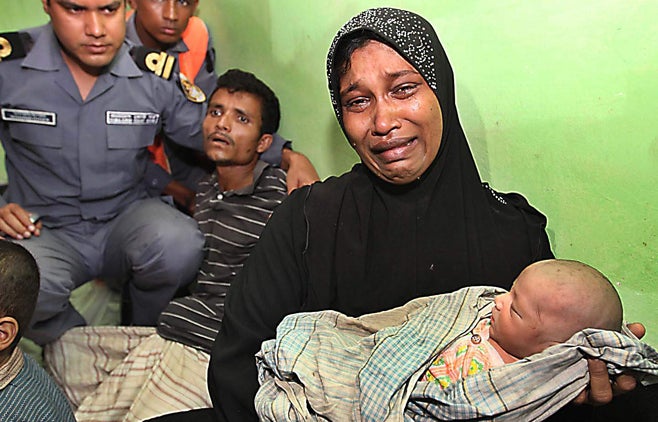
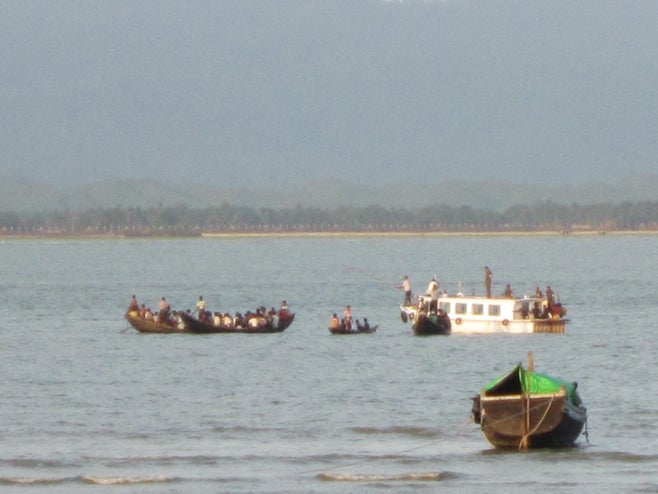
It is not fighting each other but it is another well planned genocide by Rakhines cooperatively with local armed forces. From the beginning, Curfew and Order are restored only for Rohingya and confined within their homes. While Rakhines are openly allowed to trespass and attack Rohingya villages. Local security forces who are also Rakhine are sided with Rakhine people and explored more brutal crimes that include shooting fires into the houses and letting its partisan Rakhines to torch fire. Again, Rohingyans those came out from homes were brutally beaten and slaughtered and those fleeing were shot fires regardless of women or children. Plus, sexual abuses, looting goods and cash.
In advance, waters, electric, foods are cut-off and restriction imposed in Rohingya villages since 3 June. So, it is all about well planned ethnic-cleansing pogrom. Likewise, the government also shows its sympathy by setting up relief centres and contributing aid to those attacker Rakhines' family members. While three is no consideration at all about homeless Rohingya victims of women, children and those injuries who are starving day by day.
The information came from Arakan confirmed that the death number of Rohingyan is exceeded over 10,000 from Sittwe city alone and a few thousands covering Maungdaw, Rathedaung and Kyauktaw townships. Most of them were shot dead, brutally beaten to death, burnt alive and the rest were those taken away by security forces into hidden areas. At least, 25,000 of Rohingya houses were burnt down- covering Sittwe, Maungdaw, Rathedaung, Rambre and Kyauktaw townships.
Our colleagues based in Yangon are reporting to politicians including NLD members, student leaders and high-ranking authorities. But there is nothing they could do. Therefore, there are urgently in need of intervention by intl communities, world leaders and Rohingya people living in foreign. UN's external pressure does not enough to halt on going violations suported by local authority and that would not safe the lives of remaining vulnerable Rohingyans. The matter of Rohingya is directy relevent to international principle and UN must effectively interfere.
They need immediate supply of food, clothes and medicine. People are dying of hunger and lack of medical care, shelters and clothing.
1) ............................ In Maungdaw township ....................
19 June, Tuesday
Arbitrary arrests and tortures, sexual abuses of women and girls, extortion, looting continued by Na-sa-ka and military personal. At least 200 Rohingyans have been arrested during two days from all over Maungdaw.
18 June, Monday
24 Rohingya leaders were arrested in Maungdaw Town including Dr Hla Myint, High School Teacher Hussein (Former EC Member of NDPHR), Dr Nazumuddin and U Fazzal (NDPHR elected member of 1990 election). They were invited for a meeting then taken to the Na-Sa-Ka headquarter of Kyi-kan-Byin.
70 Rohingya villagers from Baguna, Nurula villages were invited to a meeting by Government authorities (NaSaKa, Police, and Paramilitary Forces). When the villagers arrived, they were forced by authorities to hold the gun and taken video and pictures by the authorities. After that, the villagers were taken away. Those taken Rohingyans would be never returned specially in this circumstance. Most of the Rohingyas who were found with mobile were arrested by NaSaKa.
17 June, Sunday
15:00pm: Military invited meeting and arrested 25 Rohingyans from Nol-bonnya village. At the same time, military looted cash, gold, clothes from Rohingyan houses in Bagguna village.
10:00am: Another 27 Rohingyas were taken away from southern Maungdaw by Na-Sa-Ka. Those taken away people would be never come back. They are; 1. Azimullah s/o Ali Ahmed, 2. Hamid Hussain s/o Ismail, 3. Anzullo s/o Ismail, 4. Halo Mia s/o Shida Ali, 5. Mv. Hashim s/o UllahNazir Ahmed, 6. Abu Soyed s/o Wali Ahmed, 7. Abu Kalam s/o Wali Ahmed, 8. Kalaya s/o Nazir Ahmed, 9. Mohammed s/o EliasKalaya, 10. Sayedulllah s/o Abdu Mozid, 11. Dil Mohamed s/o Younus, 12. Elias s/o Shari Hossain, 13. Anamatullah s/o unknown, 14. Zonaid s/o Nur Hossain, 15. Mr. Azizullah s/o Mv. Hanifa, 16. Amir Hamza s/o Miyo Hossain, 17. Ex-chairman Kollimullah s/o Bodur Rahman, 18. Baitta s/o Nazira, 19. Mv. Noor Hossain s/o Younus.
(Note: from serial no. 1 to 13 = Anauk Ywa, Udan village, Maungdaw. From serial no. 14 to 19 = Zumma Ywa, Udan Village Maungdaw)
In other villages of Maungdaw, Nasaka called Rohingya villagers and meeting and then arrested them. In the mean time of meeting, the Rakhines and military forces entered into Rohingya’s houses and looting their valuable things and took Rohingya girls and raped them.
In Rohingya evacuation center, there is no food and medicine authorities are not providing food for Rohingya.
16 June, Saturday
Eveing: According to Kaladan Press news, Hamida (12yo girl) was killed by Rakhine Police in Kiladang village. Her brother confirmed it from the ground that Rakhine those involved in the attacks are identified as; Soe Win, Mg Mg Che, U Kaung, Pho Tha Tu, Ney Min Twe. Maungdaw Ward(4) Ploice officers Hla Myint, Tun Tun Kyaw, Maung Cha, Tin Aye (Who killed 10yo Rohingya girl). Led by Bo Latt, Aung Kyaw Thein killed more than 150 Rohingya people. Identified 36 dead bodies of Rohingya were found and other unidentified Rohingya dead bodies were also taken by Police Trucks. There are more than 100 people still missing.
A group of Rakhine people burnt Rohingya houses in Haindapara Village.
17:00 pm: Around 20 trucks load of Rohingyans are arrested and lifted to Na-Sa-Ka Head Quarter. Some identified as;
(1) Robis Ahmed, head of 100 house ( Ra Ayin Mu) and Zaw Ma Thet of Salimma para, were shot dead by Na Sa Ka
(2)Sho Fiullah, 10 household head ( Say Ayin Gong) of Lomba Goona village, was shot dead
(3) Sakina, 11 years old girl from Tha Yee Kon Tan village shot dead
(4) Roshid Ahmed, Tha Re Kon Tan Village (Shopkeeper- Tha Re Kon Tan Mar Ket (Sair Konbor Bazar)- was strongly beaten by Na Sa Ka and looted all commodities and destroyed the shop.
(5) Nobi Hussein- Tha-Re-Kon-Tan Village seriously beaten to dead.
15:00 pm: USDP secretary Phan Phyo’s (Quater 1) son Tun Hla Sein jointly organized with his collaborators Mg Nyi Mg Chay @ Hla <Chay@Hla>Myin son of Ni Mg (Quater1), Paun pae s/o Aung Gyi (Quater 4) and Kyaw Aye(Quater 3) were formed a gang to rape Rohingya women and to loot Rohingya villages. Tun Hla Sein provided his gang Police Uniform and sort of weapons according to reliable source from the ground. Almarajan(age-20) and Shafika(age-17) from Taray kundan (Sairkumbar-hoinna fara) village, are allegedly gang raped by Burmese military. 25 Rohingya youths were arrested by Na-Sa-Ka and taken to Na-Sa-Ka Head Quarter.
Afternoon: Military invited meeting with Rohingya villagers from Sair-kom-bon and Sair-kon-dan and 30 attendees were taken away. At least 3 Rohingya villagers those not attended meeting were also picked up from home.
Morning: According to Kaladan Press news, the Nasaka personnel from 3-mile and Hluntin (Paramilitary forces) surrounded the Rohingya village of Sawmawna near Myothu Gyi under Maungdaw over the allegation of hiding arms inside the village. The remaining houses in this village are facing the allegation where no men are living in the village. Only female are protecting their home from looting.
Early morning: Stranded Rohingya 15 boats load of more than 2000 Rohingyas in Naf River are disappeared.
15 June, Friday:
Military forces involved in guarding Rohingya villages. Moving house to house is allowed between 12:00pm to 3:30pm. However, the authority still prevent bringing foods from other areas. Foods, waters, medic were not yet provided. Now heavy raining period, homeless Rohingya have no shelters to protect from raining.
14 June, Thursday
Evening: A group of Rakhines entered to loot from the Nurula far villagers.
According to Kaladan Press news, the military arrested 4 armed Rakhines from Bakagonena field which is between 3 miles and Kawlizabanga village evening. The armed four Rakhines confessed that there are other Rakhines with arms in Maungdaw.
According to Kaldan Press, 10 Rohingya girls raped today by military.
They victims are identified as; Hamida-18 d/o Rahim Ullah, Rahena-19 d/o Momina and other six Rohingya girls from Baggona village and Hasina-18 d/o Abdul Haque, Hamida-16 d/o Baser and Nur Kaida-17 d/o Habi Rahaman from Nurullah para.
Afternoon: A Rohingya shot dead, five other injuries by security forces shooting into the mosque of Nurula fara. The two other Rohingyans were taken away.
13 June, Wednesday
Night: A large group of Rakhine Rebel fighters with arms were rounded by the Burmese army near Nga-pu-ra village and Nine-kyaung (Ngan Chaung) villages. But only 8 of them were captured.
Night: several Rohingyas were arrested. Unconfirmed reports are coming that there are clashes between military and Police in Shwe Za village during looting from the shop by the police together with Rakhine. Burmese Army shot dead 20 Rakhines who were wearing police uniform and robbing from Rohingya..
Evening: In some Rohingya villages, extortion and sexual abuses are taking place. Rohingya families who don't effort payment are faced sexual abuses in front of their families.
Folllowing to Kaladan Press news, 12 Rakhines with arms were arrested by army at midnight while climbing up to Pruma river bank nearby Khain Paran (Rakhine) village from a small boat.
15:00pm: A Rohingya youth in Udang village and another one in Hongyabil village were shot dead by security forces after the villagers came out to resist back the Rakhines attacking their villages. The shootings were stopped after military intervened.
Afternoon: Rohingya people have been warned not to perform Friday prayer by the authority. Dozens of Rohingyas were arrested during day time.
12:15am: Rakhines came to attack Rohingya village of Udaung but it was broke away by after villagers came out. In the mean time security forces opened fires upsides that killed a Rohingya mother of two kids.
12 June, Tuesday
11:30pm: Police, Paramilitary forces and Rakhines set fire on 3 houses of Rohingyas in Ward-(2) of Bomu Fara. Police officer Aung Kyaw Khant is leading in this operation. Police arrested many Rohingya men and youth in Maungdaw and forced them to wear Indian-dresses (or something similar to a molvi). And put each a gun on their shoulders and a backpack on their back, in order to perform as Taliban or Mujahid fighters. This piece will be circulated in the media soon.
Authority gives warning with loud speaker that whoever accommodating refugees and injured person will be arrested.
Bangladesh Border Guard had recovered two boatloads of weapons from Naff River on the night. Two Rakhines are being detained in Cox’s Bazar and continuously interrogating about the trafficking of weapons on where about it.
11 June, Monday
Midnight: a group of Rakhines entered into the Ali Thangyaw (Haisuratha) and tried to torch the religious school but the villagers had able to drive them away. Then, security forces started opening fires at Rohingya villagers.
23:00pm: A reliable source said there are 3 Burmese Navy cargo vessels arrived near Ali Than Kyaw coastal reef to unload ammunition and weapons.
Evening: Ali Tangyaw (Haisuratha) village is still surrounded heavily by security forces, smokes and the noise of the gun-fires are shaking the village.
15:00pm: Rakhine are coming out from the Monastery (located Maungdaw City Central) with Islamic religious dressed. Rakhines involving local security forces took about 10 young Rohingya girls.
14:30pm: Donpyin village set on fire by Lon-Tain(Paramilitary forces) and Rakhines. Initially, there were six trucks with full of Lon-Tain (Paramilitary Forces) surrounded the village. And they escorted Rohingya houses and let the Rakhines to enter into the village. Paramilitary Forces supported while Rakhine are setting fire on the villager houses. Many Rohingyas were shot dead by the security forces. Eye-witness described it was so horrible that even the stomach organs burst out from some bodies.
13:30pm: Houses in Hun-re Fara and the mosque are burning. Rohingya villagers who came out were faced shooting by security forces and brutally beating by Rakhines. Dozens of Rohingyans were took away by security forces that include; Master Shumshu and his family, Md Ali and his family, Dalal Roshid and his family, shopkeeper Sayed Hussein and his family. Their houses were burnt down and what happen to them is unknown. Rohingya villagers those died on the spot were taken away by trucks.
09:30am: A few Rohingyan houses were burning in Quarter(4). After Declaration of State of emergency by President Thein Sein, this morning local time 8:30 am some of Rakhine with the co-operation of police & Hluntin (Paramilitary forces) were entered Bomu-fara. Firstly, they took away property & burnt 5-7 houses of Rohingya.
At the same time, some of Rakhine monks were trying to stop burning house. Behind them, one or two Photographer are taken picture to record their documentary as a Rakhine houses was burning.
07:15am: U Ba Than Military Office (Camp no.378) shot two Rohingyas.
10 June, Sunday
18:30pm: Rohingya villagers escalated 3 Rohingya dead bodies in Myo-thu-gyi village.
From evening: Security forces started seizing of hand-phones, recording devices and cameras checking whether there is any records and foreign calling numbers.
18:00pm: Large group of Rakhines including arrivals from different towns were gathered at southern part.
17:55pm: The trucks loaded with the dead bodies of Rohingya villagers were carried to Buddhist Cemetery.
09:15am: Police Officer Than Htin killed innocent one Rohingya girl (Ramzaan- 12yo ), a Rohingya boy (Abdu Rahaman-10yo ) and her brother injured. The dead body was taken by Paramilitary Forces.
9:00am: Government ordered to leave all the NGOs from Northern Arakan State.
03:00am: Some Rohingya youths were carried away by NaSaKa Border Security Forces. At least 70 Rohingyas were killed from Myothugyi village (Kaindapara) alone.
9 June, Saturday
Afternoon: Rakhines brunt down the mosque after military guarded Narittardil(ward-5). The following day the following religious buildings have been torched to burn down; 1)Morcos mosque of Sikdarpara, 2)Noapara mosque, 3)Sambanna and Sarkumbo mosques of Ali Thangyaw.
12:25pm: Deputy Home Minister accompanied by U Aung Zaw Win (USDP- MP) arrived at Maungdaw.
The security forces and Nasaka joined with Rakhines and carry out mass killing and torching fires. Because of the Curfew order, no one dares to go out. And at the absence of witnessing Rakhines setting fires on Rohingya houses, village after village, any Rohingya comes out from house gets bullet. It is surprised that Natala villagers and Rakhines are also armed and shooting at Rohingya villagers.
In the mean time, monks are busy with media supplying fabricated news. These tragic events have been well planned in advance.
Morning: Armed security forces with Rakhine extremist equipped with lethal knives were roaming in Maungdaw town and surrounding villages. 4 Rohingyas were carried away from Fayazi village.
The monks and Rakhines escorted by security forces were announcing ‘War on Kalas, (war on Rohingyas) along the street of Maungdaw. This message was spreaded like a wild fire all over Maungdaw and Buthidaung townships.
The villagers also confirmed that many security forces dressed civil-clothes but with arms are firing at the Rohingyas.
Early morning: military forces entered into Hunri-fara and shot at Rohyingyas . At least 5 Rohingyans dead and those injuries and the dead bodies were lifted by truck.
8 June, Friday
Midnight: a groups of armed forces jointly with Rakhines came into the Rohingya villages. They opened fires into the Rohingya houses. When the inmates left their homes the Rakhines set on fire.
The Hlun Htein forces from Ngakura/Ngpura village accompanied by the Rakhine village of San Oo Rwa (Hatipra) attacked the Rohingya villagers of the same village, killing one person injuring 3 others. The dead body was carried away by the killers.
Similarly in many other villages, security forces corporately with Rakhine people fired into the Muslim houses. When the inmates left their homes, the Rakhine set fire. The villages of Hatalia, Sommonia, Razarbil, Kayandan and San Oo are among those which were also attacked.
2:30pm: Two young Rohingyas who were returning home after Friday prayer from Maungdaw Central Mosque were seriously beaten by police. One of them whose hand was broken was released after sometime while the other who received head injury was still in police custody. His condition is still unknown.
Beside, the main central mosque and prayers were attacked by Rakhine people in the presence of riot police.
That was the beginning of creation of furious tension and followed attacking each other and sparked all over Arakan.
2:00pm: The riot police fired more than 40 rounds at about 500 Rohingya peaceful prayers who are going to congregate peacefully in religious propagation centre of Myoma Kayandan village of Maungdaw town to give the respect for 10- Muslims those killed in Taungup on June 3. That killed at least two Rohingyas, several other injuries and some houses are burning at the this moment.
2) .................................. In Akyab/Sittwe city ................................
19 June, Tuesday
Morning: Fishing villager 3 Rohingyans were forced to sign in a ready made statement prepared by No(1) police station. In the form, it states to agree with those houses burnt in the villages were by their own. Two of them who had given signature were released soon but the other one who did not sign was not returned.
The villagers also confirmed that, Mr Shwe Hla, secretary of Mole-fara (Aungmingala quarter) was also taken to police custody for sign on such ready made statement on 13 June. He was released from police custody after 3 days but since then he refused to explain about the fact to his villagers.
The Nazi-villagers also confirmed that now police authority are gathering to attain such forms of signatures from acting Rohingya leaders and village heads.
Note: There are more than 12,000 displaced Rohingyas in Mole-fara (Aungmingalar quarter), Evacuations Camp. Four old man were died from lack of food and medicine. They don’t have even water to drink.
The authorities mentioned that they will not allow Rohingyas to settle in the town. Government authorities said that those burnt down Rohingya’s villages will be relocated for Rakhines who were intentionally brought from other towns of Arakan state.
According to Narinjara news report, the Deputy Minister of Social Welfare, Relief and Resettlement, U Phone Swe and the Chairman of the Merchant Association of Arakan, U Shwe Tun Aung, and regional officials, including the Chief Minister, officials from local political parties, and the town elders were hold a meeting on the cleanliness and beautification of the city that was held at 1 pm on 19 June in the house of the regional parliament in the state capital Sittwe. In the meeting, U Shwe Tun Aung is said to have suggested that this is the time for the government to distinguish its nationals and the immigrants and to be decisive for its union and sovereignty. (
http://www.narinjara.com/main/index.php/deputy-minister-says-government-will-referee-in-arakans-crisis/ )
18 June, Monday
Night: Rakhine people attacked in Myu-kul village (situated opposite of Sittwe, Sandama side) and some Rohingya houses were burning but no causality is escalated.
Authority seized hand phones from a few Rohingya villagers across Sittwe..
17 June, Sunday
Government authorities are planning to allocate Rakhine on Rohingya’s villages which were burnt by Rakhines.
16 June, Saturday
12:00pm: Remaining half-burnt Rohingya houses in Holton (Palot Taung) village were set fire by Rakhines.
Morning: Navy forces returned 30 empty boats of Rohingya. Rohingyans from Sittwe say that those on board were mostly Rohingya women and children departed by these boats from Sittwe beach were not found.
15 June, Friday
Evening: A Barugua was died after jumped-off from the top of coconut-tree when military stop him from throwing fire at a Rohingya house in Mole-fara (Aungmingala) quarter.
Afternoon: Remaining half-burnt Rohingya houses of Fishing village (Zaila-fara, Paike Tay Yat) were set fire by a group of Rakhines. Military arrived there lately and shot dead 2 Rakhines and captured the 3 other Rakhines.
From Morning: Rohingya dead bodies were carrying with Pa-la-ka trucks and buried 20 to 30 bodies in each trench in newly located graveyard near Dar-paine village.
Early morning: Military forces took control of Rohingya villages from security forces. Moving house to house is allowed during day light.
However, there are more than 50,000 homeless Rohingyans are in need of basic amenities, foods and medication. Communication and electric are still cut-off while all amenities are available for Rakhines. Now, heavy raining in Akyab but these homeless Rohingyans do not have shelters to protect from raining. Unlike Rakhine families, homeless Rohingya women and children victims are not yet received any kind of assistance from government authority.
14 June, Thursday
6.00pm: A group of 30 other Rakhines mixed of Marmagyi and Hidu people with arms were arrested by military while they are trying to touch fire at Rohingya villages. They confessed that they are organized to do this by a group of Rakhines.
Local Burmese tv (MRTV) has aired about the arrest of a group of Rohingyans with knives and bottles beside them. In deed, it is just a modern way of providing wrong image of Rohingya like it dealt with thousands of political activists who were imprisoned with false charges in the past.
Early morning: Full load of deadly weapons recovered from Buddhist temples by the military personnel, following the arrest of two Rakhine who attempted to burn down the Rohingya houses and shot the innocents in early morning today.
13 June, Wednesday
There are 1000 of Rohingya dead bodies are uncollected along the burnt down villages of Nazi, Hundhi-Khawla (Chin Byan Lan) and Ambala villages. Tens of Rohingya dead bodies were found in the cemetary near Foktoli. Plus, hundred of Rohingya injuries those killed in hospitals were shaped their head, defamed their faces and put yellow robes of monk for media circulation.
After noon: Rakhines those rounding timely are chanting- "Rakhine Pray..Rakhine Pray, Kalar..Kalar..Aloe-ma-shi" (Rakhaing Kingdom, no more foreigner).
Evening: Rakhine people those rounding timely with long lethal knives are shouting to continuously eliminate Rohingya from the land when security forces proposing the remaining Rohingya villagers to leave with empty hands. Shortly after, shooting between military and security force took place in Mole-fara (Aungmingala) quarter on the account of some military dealing to help trapped Rohingya women and children. The Rakhines shot dead an army officer today that caused confrontation between military and armed Rakhines.
Morning: Villagers from Nazi village area were dropped to along the beach side of Darpaine village by military trucks. Rakhine and security forces attacking during moving to there, killed some Rohingyans were also laid along the way.
(Note: Despite there were about 30,000 Rohingya population in the biggest Rohingya village of Nazi, only around 2,000 Rohingyans were found during military trucks carrying them to beach side Darbaine village.)
As a result of raining from yesterday evening the fire was stopped near the school and it saved from burning of the Mole-fara (Aungmingla quarter).
12 June, Tuesday
16:00pm: Rohingya People who were escaping from burning in Mole-fara (Aungmingala quarter) were shot dead by the jointly Police, Hluntin and Rakhine. Beside, Military are not taking any action.
Local authority together with Hluntin (Paramilitary forces) and Police approach to the remaining Rohingya in the city centre and demanding to give signature in the pre-written documents that agreeing voluntarily escaping from the scene to the remote area of Akayab/Sittwe. Rohingya refused to do so. They have warned that they will next in target. It may be few days to cleans up Rohingya from Akayab/Sittwe.
2:30pm: Some house in Mole-fara (Aung-min-gala) are burning..
2:20pm: Rohingya houses in Hudhi-khawla (Chin Byan Lan), Khaw-cha-fara (the edge of Thaban Lan, part of Aungmingala) were burnt down into ashes. The fire is transmitting to its closed village of Mole-fara (Aungmingala quarter).
U Tan Win, current chairman of Aungmingala village is leading a team and directly involved in setting fires.
Morning: Military forces were deployed in Rohingya villages and the situation was calmed up to the mid-day.
11 June, Monday
22:00pm: Rakhine people continuously chanting to eliminate remaining Rohingya villages. Rakhine groups who are rounding in and out of Rohingya villages by vehicles said, "this afternoon, we will finish all kala-villages".
19:00pm: Shabok village was attacked and little damaged, several Rohingyas were killed.
18:30pm: Huge crowd of Rakhines plus polices from No(1)police station came 2nd time to Santoli village. The security forces fires in the air first. Then setting fire on rohingyas’ houses. While the Rohingyas were trying to escape, the security forces shot them. More than 180 houses were burnt downand the rest including the mosque were damaged. In the even about 50 Rohingyans and 50 Rakhines were killed. More than (2+18) Rohingya villagers were taken away by police forces.
The dead bodies were taken to the Hospital. Reliable Source said -authorities poured acid on the faces of dead bodies, shaved their heads, dressed them as Buddhist monks to take the pictures so that they can use the pictures in making mis-propaganda against Rohingya people. Pictures were taken by Weekly Eleven Journal. In fact none of the Rakhine or monk was killed in the whole Sittwe(Akyab) by Rohingya people.
17:00pm: Some Rohingya escaping from Nazi village burning were shot dead in the road by security forces.
Evening: local tv(MRTV) came to make filming on the scene of Rohingya villagers resisting motion. In this manner, MRTV could highlight to tarnish the image of Rohingya.
16:00pm: The security forces surround Nazi village and torched fire and it is still burning. While Rohingya villagers from other villages are strictly confined and shooting gun-fires if they move. This is another form of the security forces' direct involvement in genocide against unarmed Rohingya villagers. Other large group of Rakhine people are also gathered at the biggest mosque near Sittwe-market and and Mole Fara (Aungmingala quarter) and subsequently attacking by rocks and alight patrol bottles. They are shouting to eliminate all Rohingyans from Arakan. It is totally different from what the Thein Sein government said in MRTV news.
15:30pm: Rakhine set fire on Pozu bazaar near Sittwe Markaz. Blaze of fire was seen from long distance.
14:10pm: Rohingya shops in Sittwe Central Market were breaking by Rakhines.
14:15pm: Attacking Sittwe Central mosque.
Afternoon: The local Burmese news groups are prepared to film the dead bodies of Rohingyans by dressing-up with yellow-robes of monk and misinforming to the world.
12:00pm: Rakhines are preparing to attack Nazi Village. A Member of Rakhine Party-RNDP, Ba La Gyi with thousand Rakhines is shouting with loud speaker to eliminate 'kala' and crossing through Mawleik(Ambala) village.
Morning: Rakhine people continued to burn down a few houses those left unburnt in East Barsara(East Sanpya).
10 June, Sunday
19:30pm: Santoli village beside Sittwe Lake (Kandawgyi) was attacked and a few houses were destroyed but Rohingya villagers resisted them and drove them away. Rohingya villagers say that like in other other villages if security forces back Rakhine people they could not resist because security forces did not stop Rakhine people and only shot fires at Rohingya villagers.
The local Burmese news groups are prepared to take video shooting of the Rohingya dead bodies after dressing up with yellow robes. These actions were took place near Fishing village, Shwe-bya village and Rohingya-fara (Zay-haung-maw-leik).
Evening: Rohingyan villagers from Rohingya-fara (Zay-haung Maw-leik) near the market were pulled out from homes and beaten to death at least 7 persons including a family of 4 persons who opened restaurant in the house,
some women were raped, the mosque in the village was destroyed. Their houses in this village can't be set fire but destroyed because residents are mixed of Rakhine and Chinese. Now, most of the villagers were shifted to Ambala fara. Rakhines people are shouting that they will soon cleans this village too. After a while, tens of Rohingya houses were selectively torched fire.
17:00pm: Rohingya houses in Fishing village (Pike-thay-yat) near Sittwe Jetty were set fire and villagers were brutally attacked. Some escaped through the waters were chopped and beaten to dead. Some attempted to escape by boat were also recaptured by Navy forces and detained by the accuse of fleeing to foreign. At least 20 Rohingyans plus about 130 mixed of Kaman and Rohingya who escaped by boats were killed.
Without escalation of accurate story, the VOA aired sideously about this villagers.
A police chief's daughter (Kaman) was raped and thrown in the road, was saved by her Rakhine friend. Her father who is working in Yangon urgently transferred her to Yangon hospital. Later she was discharged from hospital as a result of many people approaching her.
16:10pm: Security forces and thousands of Rakhine people with patrol bottles crossed into Mole-fara (Aungmingala quarter).
16:00pm: Both East and West Barsara(West Sanpya) villages were attacked. About 10 Rohingya houses of West Basara and the mosque and almost all of Rohingyan villagers were completely gone to missing. About 100 houses of East Barsa (East Sanpya) village near navy camp and the mosque were also burnt down and at least 50 Rohingyan villagers were killed. Those survived were avoided into other Rohingya villages. Rohingyans from Shwe Bya villages were attacked by brutally beating, killing, sexually, looting and their houses were set fire. Most villagers escaped by boats but some about 30 escapees were recaptured by Rakhine people were killed.
(Ko Thein Shwe, former weight player and well known by Rohingya people was involved in attacking of Barsara/Sanpya)
15:00pm: At least 6 Rohingyans shot dead and more than 50 Rohingyan villagers mostly from Sakki-fara (Thakkaybyin) were taken away as a result of they went out to stop firing houses and resisting against Rakhines' attacks in a small Rohingya village beside Sakki-fara.
In the mean time, a Rakhine model village around there call Min-gan located on Rohingya lands in 1971-91, was also set fire.
14:00pm: Curfew was imposed only for Rohingyas while Rakhine are violently burning and attacking Rohingyans.
After noon: Don Byan (Duamraung) and Bumay (Furun Fara) villages including the ancient small mosque beside Sittwe airport street, and house at the edge of Nazi village were burning.
09:15am: Police Officer Than Htin killed a Rohingya girl (Ramzaan-12yo), Rohingya boy (Abdu Rahaman-10yo ) and her brother were injured. The dead body of the girl was taken by Paramilitary Forces.
4:00am: Arzimya and Nadikya (Bu May group) villages were burnt into ashes, at least 13 Rohingyas were shot dead by Police and Paramilitary Forces, 4 injured and 30 other Rohingyan villagers captured by security forces were taken away. In the meantime, Another group of Rakhines tried to burn Nazi Village but it was stopped by Rohingyan villagers.
01:30am: Rohingyans in Magyee-Myaine (Buhar Fara) village was attacked, houses and mosque were destroyed.
1) One of the victim who was killed is identified as Mohammed Hussein and his house was also burnt down.
2) Nur Begum was chopped and packed in a Jute bag at Mayu Road. The dead body was said to have been hidden by the police.
It has been reported that the riot have been supervised by Aung Myat Kyaw an MP at State Parliament.
For this destruction, Aung Myat Kyaw is using Aung Tun Sein (Olympic group) and Pho Sein (Danyawadi group). The group also attacked the ancient small mosque situated opposite of this village near airport but not burn-down in this stage.
01:00am: Rakhine who are wearing muslim caps were seen roaming in the streets of Sittwe trying to pretend as Muslims. Following this, medias are filming for anti-Rohingya propaganda.
9 June, Saturday
From the evening: Rakhine people started gangly attacking of Rohingyan villagers and setting fire of Rohingya villages after security forces shot fire into the houses. Houses were burning up to morning.
In Bumay (Furun Fara) village, under the guide of Rakhine people the police shot dead 5 Rohingyans during they went into the houses of those Rakhine set fire in order to stop the flames.
Rakhine people are rounding with lethal knives and chanting with loud speakers- (“terminate kala”, “kala-kala..kill-kill”). Several other Rohingyan houses including houses from Kondan-ward (Nazi village area) were set on fire. It is also confirmed that Rakhine people those came to set fire were entering wearing muslim religious dresses. The local authorities plus police forces are encouraging the Rakhine to eliminate the Rohingyas and set fire at houses.
The Rohingya villagers confirmed that military authority refused the approached of Rohingya leaders seeking to deploy military security forces in Rohingya villages.
From the beginning of violence, thousands of Rakhine people were arrived from different towns and temporarily camped along the beach. A reliable source revealed that Rakhines those brought in Buthidaung and Sittwe were organized by current Rakhine party-RNDP.
4 June: A staff of a French NGO (Artsen Zonder Grenzen-AZG) and former political prisoner- Kyaw Hla Aung(B.A LLB), nominee MP of Rohingya party-NDPHR for Sittwe during 1990, was arrested from Ye Nwe Su (Derum fara) quarter with false charges on 4 June and taken to unknown. It is confirmed that now he is neither in the custody nor prison. But according to Yangon Press International's report the arrest was in the morning of 11 June.
His first term arrest was took placed in a few days before 1990 election in May therefore he was not became MP. He was released in the end of 1997 after serving eight years imprisonment.
3 June: Since the beginning of mass killing of 10 Muslims in Taungup on 3 June, a large group of Rakhine people firstly marched to attack the ancient Foktoli mosque and village of Nazi. But it was broke away by Rohingya villagers and security forces were lately arrived there and stop further confrontation.
6) ...........................In Kyauktaw township..........................
18 June, Monday
Evening: A Rohingya mother from Fishing village(Zai-la fara) who went to bazaar was brutally beaten by a group of Rakhines.
4:00am: Rohingya houses in Khaungdok Alay-Kyuan (Barua Fara) ward were attacked by Rakhines. 19 Rohingya houses including a mosque, 50 haystacks and 30 huts were burnt down.
17 June, Sunday
22:00pm: Mv Shafuddin and 3 other Rohingya villagers were brutally beaten by Rakhines in Tan Thaung Rwa (Ta-naonh Fara). Huts and haystacks in farming lands were burnt down. Mv Sahfuddin was died one day after and no hope for the 3 others too as a result of they can't access for medication.
17:30pm: 17 Rakhines who worn muslim religious dresses and leaving after attacking of Rohingya village- Khaungdok (Khondol), were arrested by military.
About 500 Rakhines protested in a park of Kyauktaw town demanding the release of nine Rakhines from Nagaya village who were arrested with arms at around 18:00pm of 16 June and for involving in an arson attack of Rohingya village.
16 June, Saturday
20:30pm: The Rohingya villagers from Fa Laung Rwa (Falom-fara) abandoned their houses in good time and escaped into jungle. They reported before they leaved from the village.
20:00pm: 94 out of 96 Rohingya houses in San-ga-daung (near Sugar Mill) village were burnt down and 75 Rohingya villagers dead in the attacks by Rakhine people. 49 other children who were taken by Rakhines were missing. The dead bodies were not allowed to bury and Rakhines are continued to attack them therefore the rest of the Rohingya villagers escaped into jungle.
A group of 25 Rakhines who are wearing muslim religious dresses and setting fire at Rohingya houses were arrested by military.
13:30pm: Hundred of Rohingya houses in Khaungdok Alay Kyun (Barua-fara) were burning by Rakhines with collaboration of Paramilitary forces. Some Rohingya villagers approached at military but military forces who are escorting there said that they have not received order to shot Rakhines even they attacks. The dead number is not yet informed.
15 June, Friday
12:00pm: 21 houses of Rohingya and a mosque were burn down Apaukwa village.
Second term attacked by Rakhines burnt down another 25 Rohingya houses adding total 46 houses.
16:00pm: A group of Rakhines attempted to set fire in Fishing village (Zaila-fara) but it was stopped by villagers. In the event, a father and son were beaten to dead by Rakhines. Soon after military forces were arrived to control and drove Rakhines people away. Rohingya from Kyauktaw town confirmed one Rohingya died and several got injuries in the event.
A few hours later, Rakhines started setting fires of huts in Rohingya own farming lands. About 22 huts including crops, barns, haystacks were burnt down.
14 June, Thursday
Security forces suggest the Rohingya villagers to leave with empty hands from their homes in good times.
11 June: Selling foods, oil and supplying any kind of aid are banned for Rohingyans while Curfew is imposed only in their villages.
9 June: Curfew imposed on the Rohingya villagers, asking to stop going out of villages and even from the houses. Dozen of Rohingya youths taken by authority are gone to unknown.
4) ....... In Rathedaung township (4th largest Rohingya population, 124 Rakhine villages and 22 Rohingya villages.)
19 June, Tuesday
Afternoon: Mv Sayed Kassim who reside in Sydney of Australia confirms that his village, Kara-ro Kondan (Sara-parang/Tharapran) village consisting about 120 Rohingya houses were burnt down by Rakhines. This village is situated among 24 Rakhine villages and this was the 4th time attack by all Rakhines from 24 Rakhine villages. 35 Rohingya villagers including women and children were died.
Despite Rohingyan villagers had reported to military whenever Rakhine people approaches and agreed to offer payment for military guards, the military had not provided protection for them.
Morning: Rohingya village –Nyaung Pin Gyi (Muzardiya)- was burned down by Rakhines. In the attack, 6 Rakhines and 2 Rohingyas died.
Morning: Rohingya houses in Anukpran (Anakpran) village were set fire by Rakhines. 51 out of 480 houses were burnt down. 8 Rohingya villagers died during gun-fires by police. Two bodies were escalated and the rest 6 bodies were taken away by Rakhine people. Witnesses say that police chief inspector U Tan Oo was directly involved in the attacks.
8:30am: Approximately 1,000 Rakhines with fire arms attacked Rohingya village of Anukpran (Anakpran) by the help of in-charge Police of Kodaung. In the attack, 60 out of 500 Rohingya houses were burnt down, 8 Rohingyas shot dead and many were injuired. 8 Rakhines were also died after Rohingya villager resisted against them. A Platoon of Army watched the scene from out side the village. Finally, the army entered to control the situation. The villagers are very worrying for attacks at night.
14 June
Early morning: Mv Sayed kasim from Rathedaung township who reside in Australia, confirmed that at least 200 Rohingyans were killed in his hometown today in the attack of Saw-fa-rang Fara by Rakhines. There were more than 200 Rohingya houses in this village.
13 June
Evening: Over 1,000 Rakhine were gathered and torched many Rohingya houses in Kondan (Kuti-chaung) village jointly with police and Hlun Tin. Numbers of dead were unknown. About 50 Rohingya houses consisted in this village.
From the beginning, a few houses in Rathedaung were set fire, while the rests are in serious fear.
5) .................Buthidaung township...................
18 June, Monday
Na-Sa-Ka (Border Security Forces) of No-9 region completely destroyed a large two floor religious school building in Taungbazar village. In the beginning, Na Sa Ka themselves destroyed the building and then the local villagers were forced destroy it. The building was made of wood and the roof was of tin sheets.
More than 2,000 Rohingyas are taking shelter in Nyaung chaung village high school of Buthidaung. They were escaped from Rathadaung Town after they were attacked and their houses were burnt down by Rakhine. 3 of them were died due to lack of foods.
14 June, Thursday
22:00pm: Police forces shot a Rohingya (Noor Alam) who live in Maraung Village of Buthidaung Town.
Evening: Rakhines alert to begin in Buthidaung from tonight.
Morning: A Rohingya Ko Soe Myint, senior staff of UNHCR senior staff of UNHCR was arrested and beaten by authority. Many other Rohingya who worked for UN organizations in Maungdaw and Buthidaung are also gone to missing.
11 June, Monday
22:15pm : About 500 Rakhine brought from Taunggote were arrived in Buthidaung.
10 June, Sunday 00:35am: Two boatloads of Rakhine were brought in to the town of Buthidaung from other places under the arrangement of local authorities.
9 June, Saturday
Rohingya villages are under highly alert, while the authorities are seizing all kinds of metal knives and etc.
............................ In other regions...............................
3) Pauktaw township: Rohingya village, has been surrounded by Rakhine people from 9 June.
21:00pm of 11 June: Burning of Rohingya houses begin in Pauktaw Town.
Mrauk-U township: Rohingya villages are under-way to be attacked, while dozens of Rohingyas arrested by the Rakhines were taken into missing.
Min Bya Township
16 June: Rakhines rounded up by Aung Dine village and Sakyar villages. Rohingya people from Min Bya town are worrying and do not know what time Rakhines will set fire their houses.
Rambre Township/Island (Rohingya population is less than 10% of the town's population)
10 June, 12:30pm: Mr Hashim from Rambre, now residing in Australia confirms that 21 houses mixed of Rohingya and Kaman and two mosques in the village of Tan Rwa, were set fire. About 30 youths taken away buy authority.
( Causalities are yet to be escalated from these regions due to no communication available. The villagers are escaped into jungle. There is no information about Kyauknimaw village at all.)
Myebon Township Muslims in Myebon township are mixed of Rakhine muslim, Kaman and Rohingya and population make up around 700 people that size is just about 1% of total Rakhine population in Myebon. Their houses are situated in the Khataktin village of Taungbo Quarter.
Their houses were rounded up by Rakhine people who came from different areas during the time of violences occurred in Sittwe. However, their neighbour who have been lived together for decades are not agreed with any attacks upon muslims and prevented as much as they can. Due to such disputations, military were arrived on time and protected them.
One of their neighbour respected Rakhine leader explained outsider Rakhines those came to attacks muslims that these muslims people have been living with them for generations without any problems and they speak only Rakhine language either. They have already asked to pave away to out from Myebon, they will abandon everything if they could. But these muslim people have no place to escape. So, they would be died here but not alone and their houses within Rakhine village. Incase these few houses of muslims were torched, most of Rakhine houses beside them will be burnt down.
But some Rakhines set fire a muslim house which was only one in central area (Alay Baine) that caused 20 of Rakhine houses inlcuding that muslim house were burnt down since the beginning of violence.
Rohingya people occasionally face intolerable violences are also part of Arakanese Rohingya are strucked from citizenship right under 1982 new citizenship law affected on the changes of Rakhine state from Arakan state in 1974.
International communities including the world leaders need to enhance the Burmese government to urgently halt on going brutal attacks against defenceless unarmed Rohingya, to take action against those committed crimes and to restore Law and Order and the equal rights of native Rohingya people including their citizenship right.